
At the Hedge
A short tour of edges, hives, and how this newsletter works

The Perennial Workshop is my way of weaving a few threads together: a seasonal note, a piece of history, a bit of systems thinking, a practical tip, and a reflection that ties them. As I’m only getting started here on Substack, I’ve been contemplating the core of this newsletter-in-the-making. Here are some thoughts on edges and hives, on patience in writing, and on what I hope this newsletter becomes, so it can sustain itself.
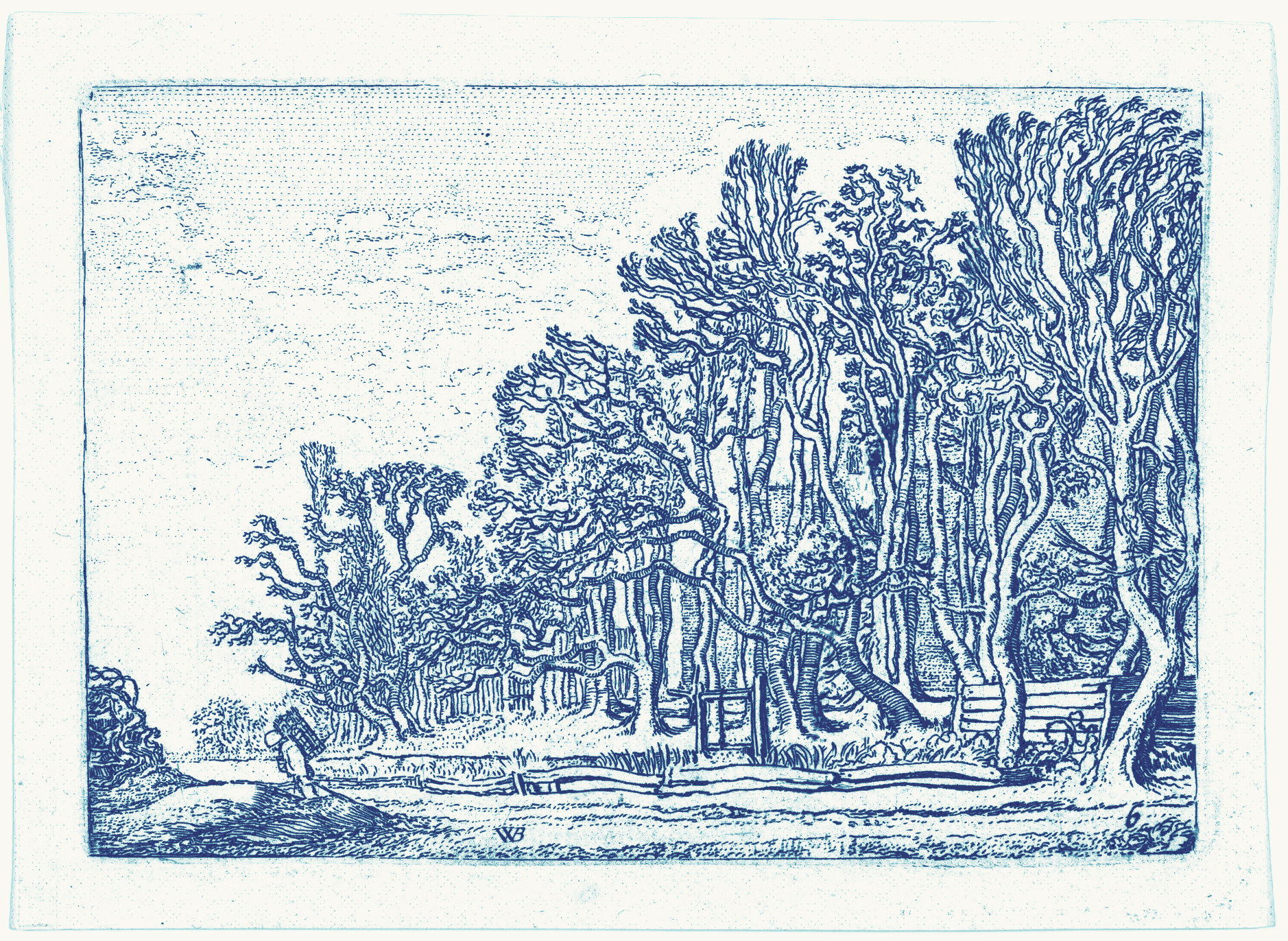
Observations from the Borderland
Here in Belgium, autumn has arrived with a certain suddenness. It feels almost refreshing after the long spell of summer. My favourite seasons are the in-betweens, those transitional periods when every small change outdoors still delights. One of my routines is to open the kitchen window first thing in the morning, stars still shimmering, and take a few good breaths.
Later, a faint sun started to appear, so I thought I'd better take advantage of it while it lasts. I went outside for some fieldwork, pruning the hedges at the edge of our little garden. The ground was already covered with reddish-yellow leaves, as if nature couldn’t wait to retreat. I suppose it needs the rest, too.
Yet even in the chill, the borderland was full of life. Late bloomers held firm, offering nectar to the bees. Tansy, with its recognisable, herbaceous smell, always pulls me back to childhood. Tall, yellow ragwort, beautiful but poisonous. The big, conical flowers of field bindweed, that eternal strangler, its rope-like stems like nature’s tripwires, making me stumble and curse.
Above me, a group of swallows occupied the airspace. After years of absence, they’ve finally returned. I like to stand and watch their playful flight. With swift movements, they circle around, like little combat pilots snapping mosquitoes mid-air. I once read a single swallow can eat up to fifty thousand insects in a week. Aerial pest control, free of charge. Before winter arrives, they’ll leave too, back to Africa.
Learning from the Edge
Back to the hedges.
I’ve always had a weakness for border landscapes. There’s more going on here. More diversity. More surprises.
Science has a name for these places: ecotone - the transitional zone between two ecological communities. Ecotones matter. They increase the dynamism of living systems.
Ironically, our human-shaped landscapes create more of them: farmland meeting forest, cities pressing into fields. But let’s be honest, that ecotone in front of me is just an overgrown hedge in need of trimming.
And yet I can’t help it: I’ve come to think of the Perennial Workshop as an ecotone too. A borderland where ideas meet and mingle. Scraps, notes, reflections, research. Hopefully, something worth reading.
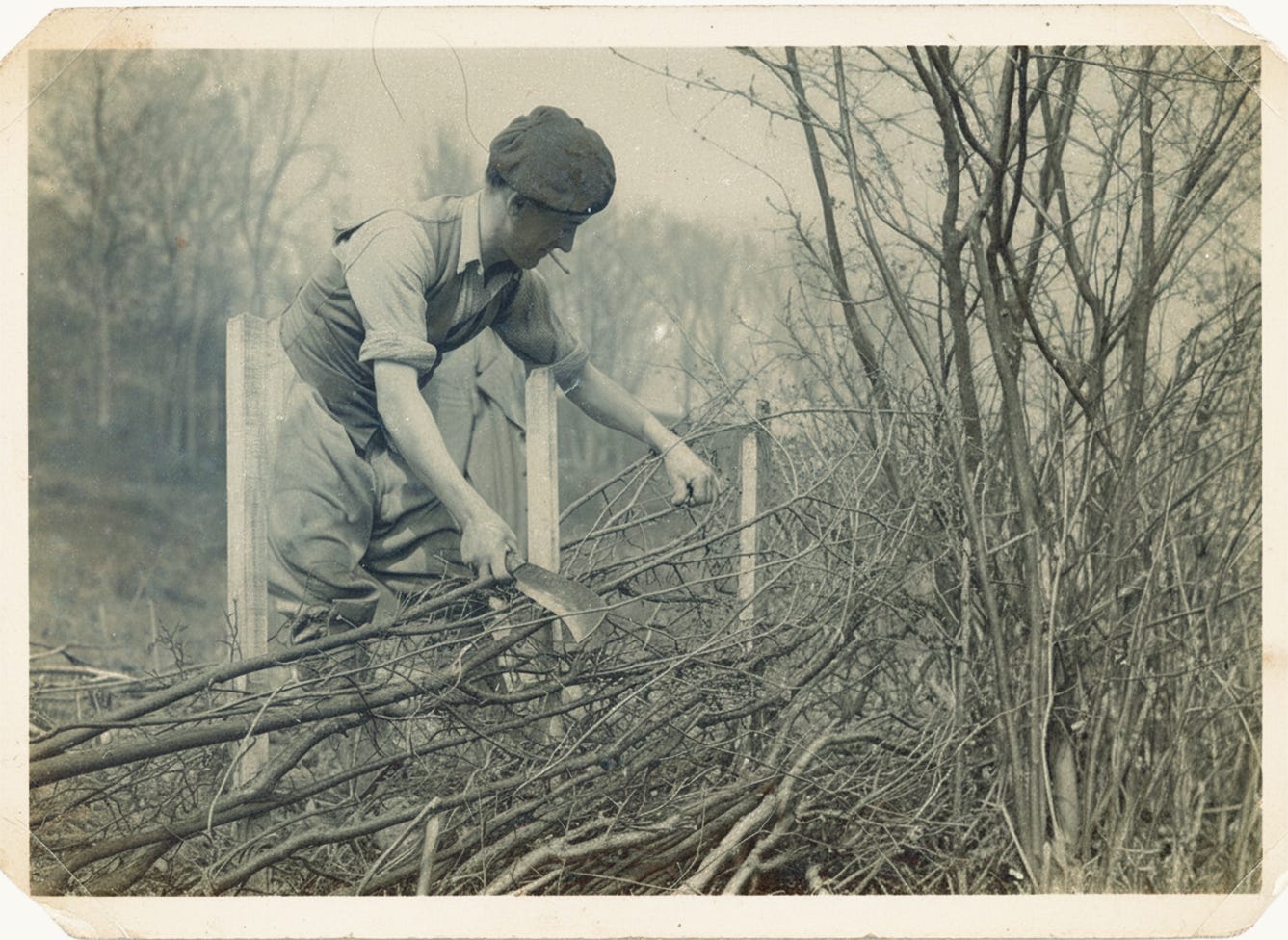
On Taking Your Time
Umberto Eco said the best part of writing was the research. The years before a single line. He spent eight years investigating Foucault’s Pendulum before he wrote it. Yes, eight years.
I do love that research phase. Wouldn’t want to skip it. Though I have to admit: I once spent three months staring at a blank page, convincing myself I’d forgotten how to write. Turns out, I was just avoiding the real work.
Montaigne once wrote “I am myself the matter of my book,”. Which, I guess, is another way of saying: when you look closely enough at yourself, you find everything else too. And still, the universal wisdom in his writings is still relevant as ever .
And then there is Italo Calvino. I’ve been re-reading ‘If on a Winter’s Night a Traveller’. It feels written directly for you, and also for no one at all. His essays praise multiplicity, lightness, and openness. Not a closed system, but a dotted border like the hedge: full of edges, full of possibilities.
Patience, circling, lightness. They remind me writing doesn’t have to be neat, or quick, or even finished.
The Hum of the Superorganism
Then, of course, the bees.
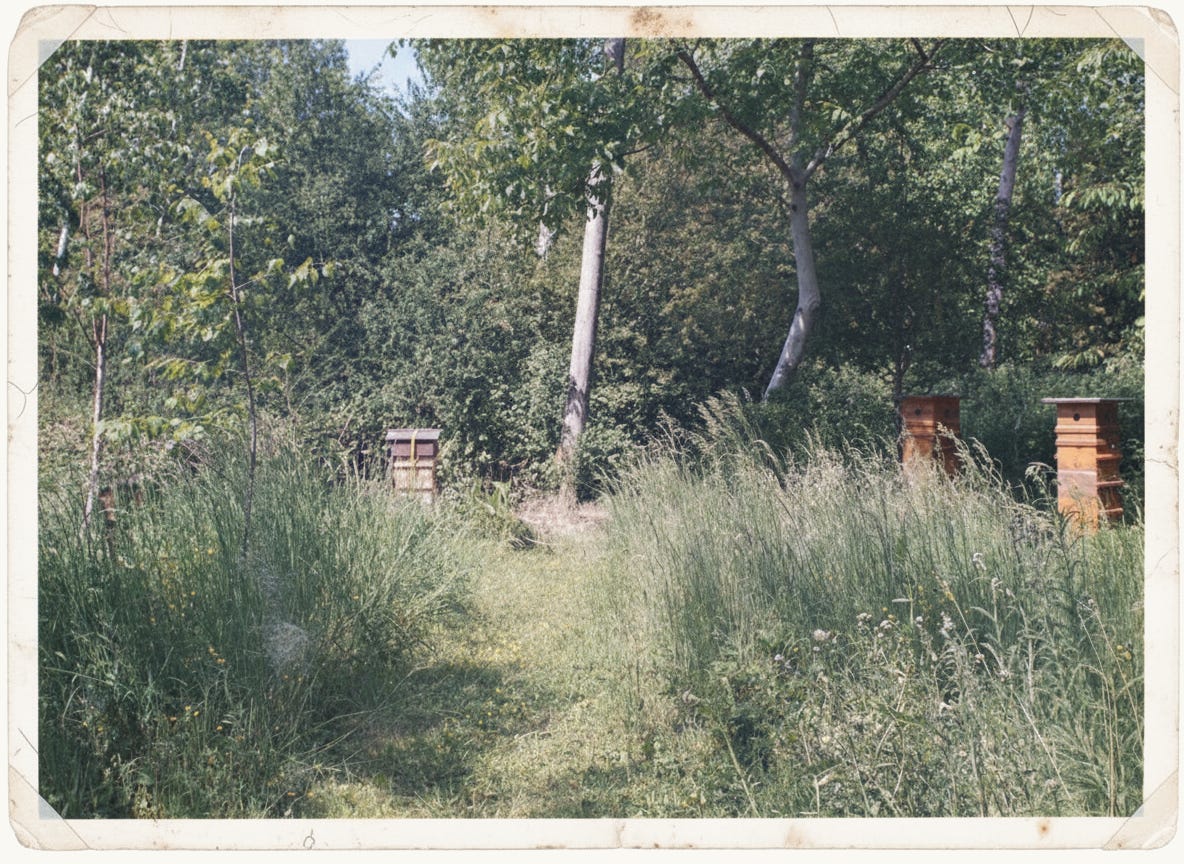
At the edge of the woodlot, half in the hawthorns’ shade and half leaning toward the open field, stand my hives. Between gardening chores, I sit there, watching.
Bees doing their tiny, individual jobs. Foragers staggering home with clumps of pollen sticking to their legs. Patrolling guards, staring down wasps. Builders chewing wax into comb. Nurses hunched over brood cells like midwives.
Here’s the thing. Alone, these tasks are nothing. Together, they are everything. The colony as superorganism (The Germans even have a word for this: Der Bien. Not the individual bee, but the hive-entity itself.).
Maybe that’s what a newsletter is, too. Not one heroic essay, or one single-minded vision. But a linked collection of thoughts and notes. Many small jobs done reasonably well.
The Importance of Diversity
So I am building this Substack like a hive, on the borderland of my thoughts.
Some essays will be more theoretical. That’s the Macrocosm, I like to call the Observatory. Here, I examine the main principles of the possibility of self-determination and resilience.
Then there is the Microcosm: the Field Guides. These are the practical translations of the Observatory: observations, actions, small implementations.
However, more often than not, Observatory and Field Guide start mingling together, forming the braided network of my thoughts. Theory and praxis. Each edition is a node in a larger picture. Linked together, these nodes form an interconnected web of research on resilience, adaptivity, and agency, drawn from the things that populate my mind: beekeeping, nature, creative work, craft, technology, systems.
Writing is, in part, learning to craft a focused essay: the individual node. But there’s even more: all of our writings are part of a living network holding our concepts and ideas. Over time, a constellation forms: a map of the principles we live by. A living guidebook to consult whenever necessary, guarding the consistency between what we believe and how we act.
The incarnation of a superorganism.
A Practical Aside
Structuring my newsletter this way makes the daily writing routine far more enjoyable. I’m not on a factory line, stamping out identical posts. Instead, I move from theory to practice, from frontend to backend. Each essay with its own rhythm and pace.
Each one links to the others, forming the body of work.
I never expect one piece to do everything. Shorter field notes provide breadth. The essays dig deeper. I’m working with roles, not quotas.
And, like any good gardener, I collect seeds and I keep a compost heap. Fragments, quotes, half-formed ideas: they all go in the seedbox. If the writings grow too wild, I’ll prune them, just like my hedges. Tossing the clippings on my compost heap. Let them turn into fertile soil for another season.
That’s the small, sustainable ecosystem I envision.
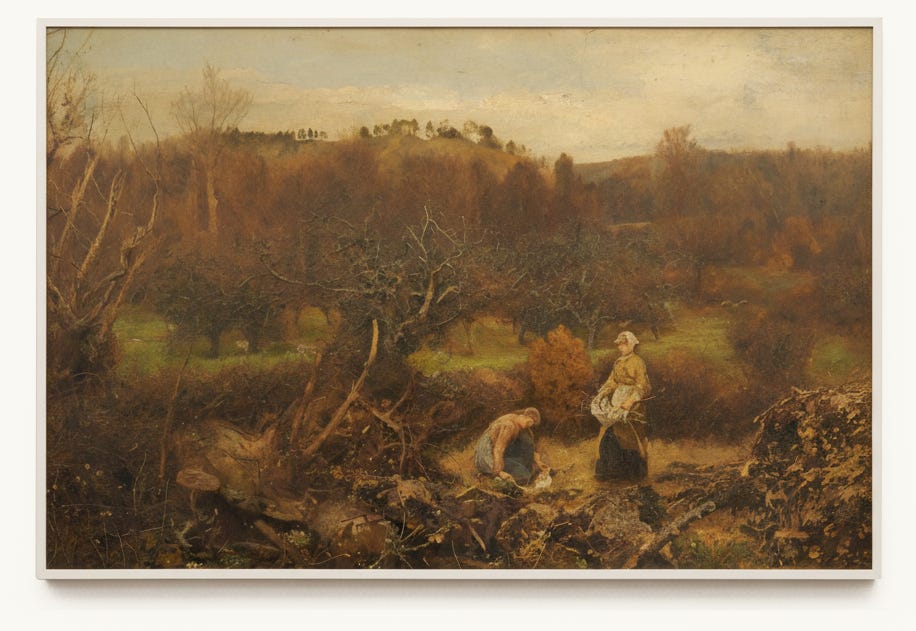
Toward Fertility and Resilience
Which brings me to the larger word. Sustainability.
Usually it means panels on a roof, or a car with a plug. The consumer’s version of virtue. But I think of hedgerows and hives. I think of resilient, diverse and interconnected systems. It's the difference between looking for short-term, economic gains and long-term, sustainable investments.
Even a weekly newsletter shouldn't become pure production. It shouldn't demand the same thing of me every week. Indeed, the writing itself should keep me engaged and inspired. That then, is the sustainability I'm talking about.
So I make sure my writing is guided by the seasons. I make sure it has places where ideas can rest. I let it move at its own pace. That way I can keep going without fatigue. And maybe, as a side effect, build a body of work worth tending.
Circling back towards the self, in the spirit of Montaigne. Taking my time, like Eco did. Always lightly, as Italo Calvino urged.
So this is what I’m trying to build here. Not a content machine, but a small ecosystem.
Slow growth. The hedge thickening year by year. The bees, guided by seasons.
Collected at the edge of the fields: where bees, words, and seasons meet.
This newsletter is a small ecosystem, and every reader is part of it. If you’d like to join, you can subscribe below.