
When Nature’s Calendar Breaks
A meditation on shifting seasons, non-native species and the art of letting go.

Dear Reader,
I’m writing this as the snow keeps gently covering the surrounding landscape. This is the best time — to use the words of Thoreau — to ‘keep a bright fire both within my house and within my breast’. And what can keep our spirits more uplifted than contemplating the possibilities of this year’s garden whilst enjoying the warmth of the stove?
In this braided edition, then, I am exploring both the wild and the garden. I’m looking at the impact of shifting seasons, the invasion of certain species and how we can design our gardens to cope with these challenges.
Oh yes, I should not forget to mention that I’m experimenting a bit with the format and layout of my newsletter. Over the next weeks I’ll try a few different approaches. Insights through experiments, after all, are part of the idea behind the Perennial Workshop. I would love to hear which format works for you.
I hope you enjoy the read,
Micha van Amsterdam
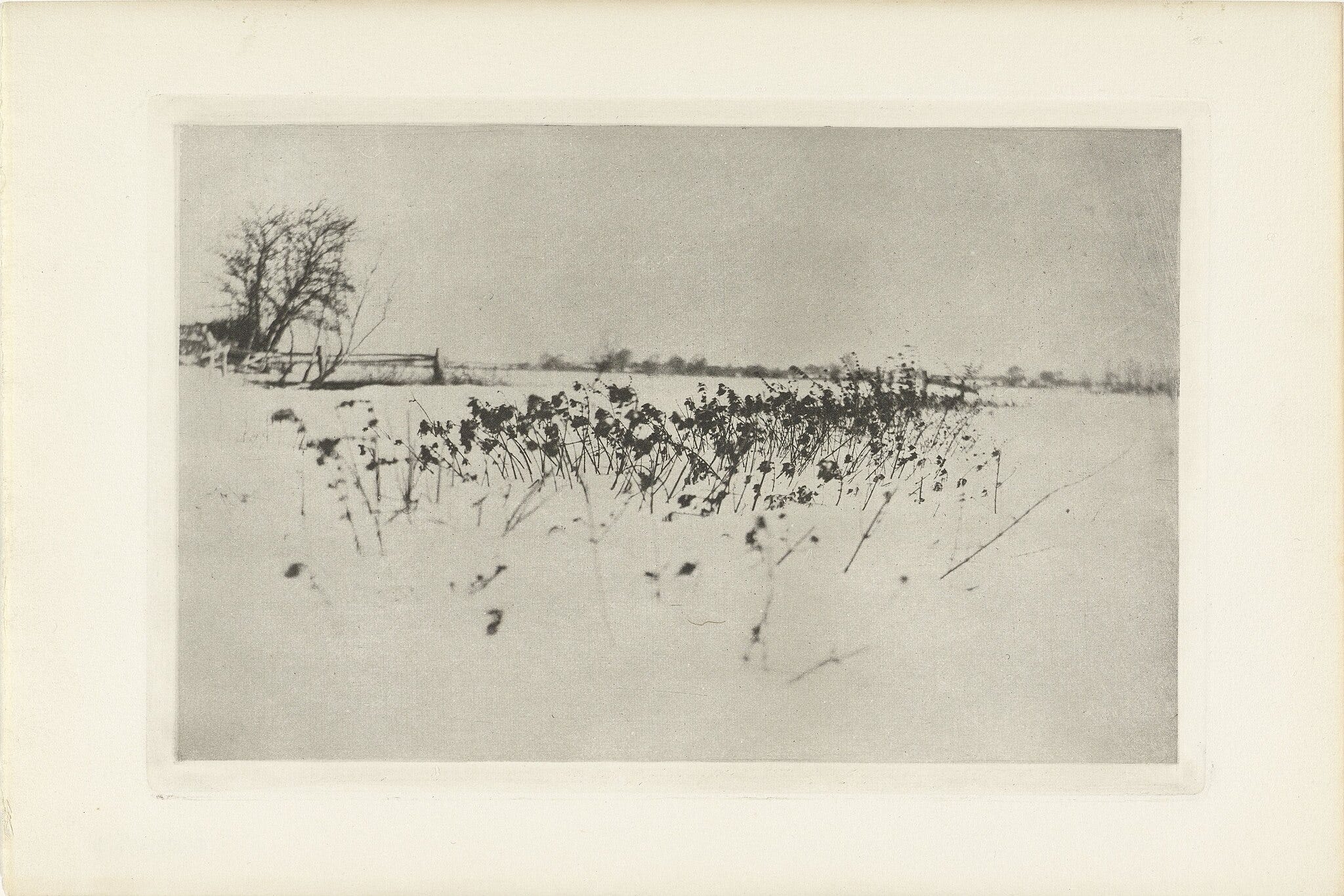

A few days ago I was taking a stroll to the back of my little woodlot. It’s a 200-meter-long, narrow strip running east-to-west, adjacent to our garden.
It used to be a plantation of Canadian-poplar. They were once planted across our landscapes as a fast, cheap timber crop that supported local industries like match production. But, as with so many things, nowadays conditions have changed. Local wood is part of a global market, and the poplars get exported to China. So much for a circular, resilient economy.
After the clearance of the poplar-plantation we were lucky to get the chance to buy this small strip of land. For most people it probably doesn’t seem like much, this tiny corridor in an otherwise fragmented landscape. For me, it sparked my imagination with an infinite array of possibilities.
Yes, it’s true, the soil was firmly compacted by the use of heavy machinery. Huge piles of branches were left on the field. Soon, brambles started a stubborn race to take over. And they seemed to win.
What to do, then, with this broken piece of ‘nature’?
Leave it wild? Cultivate it? Slowly, a plan started to develop in my mind. I would turn this bramble field into a productive food forest.
Plant fruit and nut trees. Underneath maybe some herbs or edible perennials like asparagus or wild kale. A transitional zone, where conservation and agriculture meet. But, what actually is true nature, I started to wonder? How to define that invisible line between ‘wild’ and ‘cultivated’?
To answer this question for myself, like so often, I had to turn to the bees.

The Shift of Seasons
Beekeeping, just like farming, obligates one to arrange his life according to the seasons. Spring: prepare for swarming. Summer: harvest. Autumn: prepare for winter. Winter: rest.
But here’s the thing: Seasons are shifting.
Spring and Autumn are starting earlier but getting shorter and shorter. Summer is getting longer. Now, one could argue that this doesn’t have to be a problem. An extended summer seems quite nice, doesn’t it?
Well, tell that to the bees. Our native trees and plants are not adapted to these changes. As temperatures are rising faster in the beginning of the year, trees are also flowering earlier.
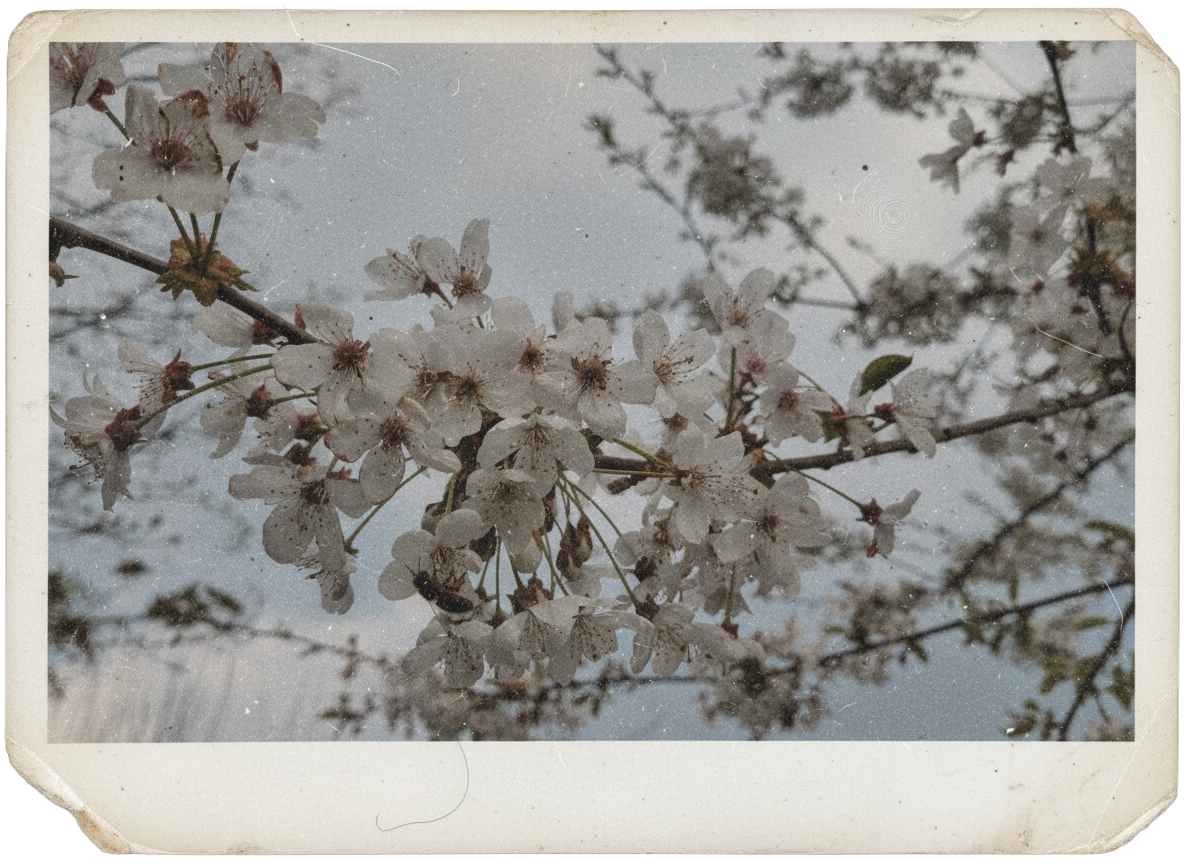
Let’s have a look at those lovely wild cherries trees in my garden. Innocent and unnoticed, they stand scattered randomly around my little woodlot. But once in bloom, the forest turns into a impressionistic, fierce carpet of white flowers, filling the air with the essence of spring. But most importantly: their flowers form an important banquet for wild and cultivated bees alike.
However: last year, once more, spring came early. The cherries, eagerly, woke from their winter dormancy in late February. They didn’t suspect a thing. Ah, gentle spring is there, they thought. And so they went on to bloom in the midst of March.
Alas, while the days in March might be warmer than ever before, nights still get chillingly cold. A spell of several sub-zero nights marked the fast end of their flowery reign.
And later in that season, a similar observation.
The small-leaved lime. An important late blossoming species in my area. It provides a valuable late-summer source of food for our bees. It’s often even one of the last crops for the bees before the advent of autumn.
But once again, the same pattern. Seasons shifting. Earlier blooming. The lime flowered mid-July, marking an unwelcoming early end to the pollinator season. After that: almost nothing, but waiting for a desert-like summer to flow unnoticed into a mild, lukewarm autumn.
Result. Almost no pollen or nectar to be found. High competition arises for the sparsely available sources of food. However, even this simple noticing of these gaps is important. It’s the first step towards designing a solution.

What we Mean by ‘Nature’
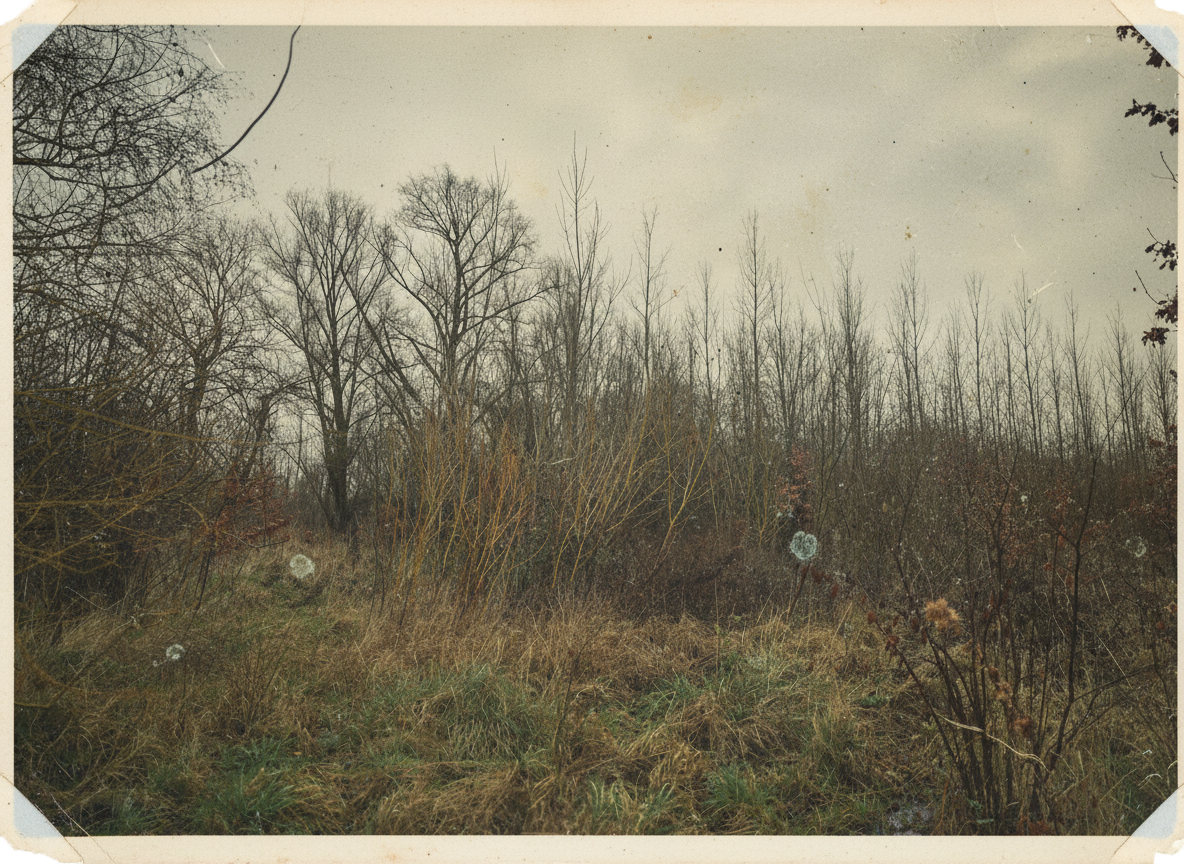
Now what exactly is that thing we call ‘Nature’?
Standing there in my woodlot, watching saplings compete with brambles, I realized I was caught between two ways of seeing. On one hand, I’m just a part of it all - the bees, the trees, the garden...everything. we’re all part of the same evolutionary story. Adapting. Spreading.
But I’m also the one holding the pruning shears. The one deciding what stays and what goes. The one mapping out a food forest in my mind while staring at a bramble patch.
Social ecologist Murray Bookchin called this tension our “two natures.” We’re biological beings shaped by evolution. That’s First Nature. But we’re also thinking, planning creatures who reshape the world around us: Second Nature. As he put it, we “create an environment that is most suitable for our mode of existence.”
In Second Nature we don’t see ourselves part of it. Nature then, in this definition, is decoupled from human systems and seen as an external attribute.
Animals adapt to the world around them; human beings innovate through thought and social labor. For better or worse, they alter the natural world to meet their needs and desires – not because they are perverse, but because they have evolved quite naturally over the ages to do so.
—Murray Bookchin, The Ecology of Freedom
This all then, made me think about that cleared plot of land in front of me. To which extent should I intervene? Leave it alone? Plant some common, native trees? Or indeed, add those cultivated and even non-native species for the food forest I dreamt of?

Disturbance and the New Wild
So, let’s have a brief look into the realm of plant origins. Let’s look for a bit of context.
When talking about non-native and even so called invasive species, the patterns of Second Nature can easily be dissected. Over the ages we have disrupted and altered the natural landscape by design, innovation and technology or more direct: by our yearning for infinite growth and an eternal strive for progress.
If we trace back direct human intervention into Nature, well, we can travel back to the first Homo Sapiens making tools out of bones and sticks. Or kindling with fire and therefore directly and consciously altering the surrounding landscapes.
In fact, the exchange of species has accompanied trade, empire, and botany for centuries. European horticulture has a long tradition of mixing local and introduced plants.
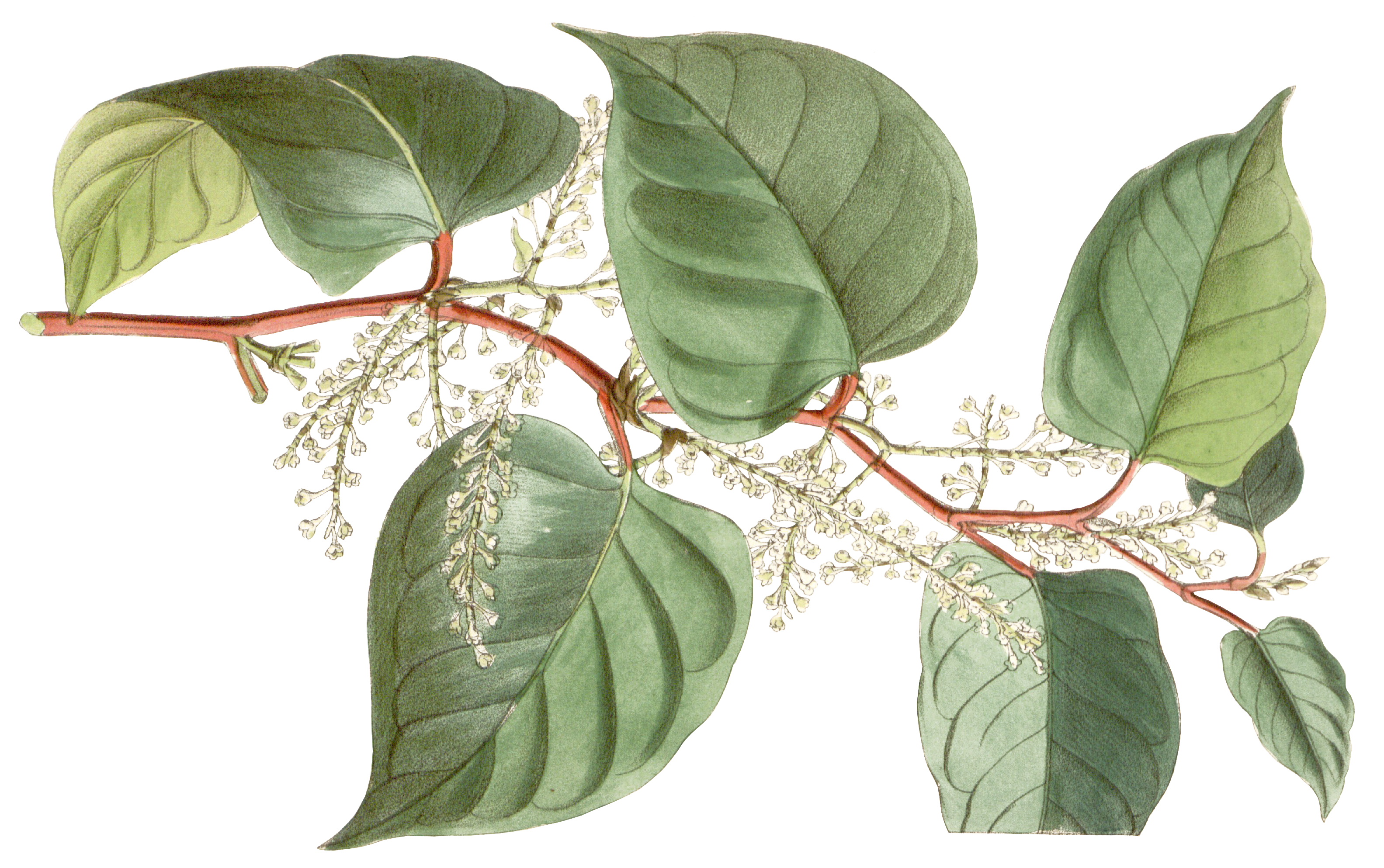
A good example of that is the infamous, and in Europe invasive, Japanese knotweed (Fallopia japonica). It was introduced in Europe for the first time in the late 19th century in the Netherlands, where it was praised and lauded for its ornamental aesthetics but also for its practical uses. In their research paper ‘Prize-Winners to pariahs - a history of Japanese knotweed (2000)‘, Bailey, J., & Conolly, A. sum up the long list of characteristics of why this special plant was looked upon with so much regard in the past: its growth strength, appearance, medicinal uses, its usefulness as a windbreak, the edible young shoots, a suitable fodder crop for livestock, useful as a soil-strengthening crop in sand dunes, late-blooming flowers that attract bees in droves and, yes, dead stems that are ideal for making matches. Now, who wouldn’t love a plant with so many marvelous features.
Today, of course, Japanese knotweed is taking over entire landscapes; competing with, and disrupting, local and native species ecosystems.
Japanese knotweed just loves disturbance. In fact, the establishment of the species took a fast start in the first half of the 20th century. The two World Wars left behind vast areas of devastated, munition-contaminated landscapes. And it just so happens that this is precisely the kind of environment in which Japanese knotweed thrives. It has no trouble growing in soils polluted with heavy metals. The plant favors disturbed, fallow land where the soil is exposed to more light and where nitrogen mineralization is increased. In this way, it rapidly colonizes areas where other plants cannot survive.
The post-war 1950s were also marked by immense economic growth. During the reconstruction of urban and industrial sites, tons of soil were moved — resulting in the massive spread of Japanese knotweed rhizome fragments.
And that, practically sums up human nature. We first disturb natural landscapes, as if our interventions don’t have any consequences. We disturb the natural balance. We disturb the existing dynamics and conditions. We disturb the equilibrium. Every possible cause gives us a motive to modify natural landscapes — be it war, population expansion, the urge for “progress”, or plainly our inability to let things be the way they are and not intervene.
If it is in a disrupted landscape, then, that most invasive species find a clear and easy niche to settle and proliferate. So, blaming the invasive species (be it the Japanese knotweed or the Asian hornets predating on my bees) for being here and taking advantage of preferable conditions is a bit of an absurdism.
But. Like everything in nature, there is a good reason these plants start expanding in certain parts of our landscapes. Science and environmental writer Fred Pearce, in his work The New Wild sums it up as follows:
All around the world, alien species are on the march, often with human help. But mostly they are moving into places we have messed up. They are often helping nature’s recovery.
—Fred Pearce, The New Wild
Pearce argues, that these species simply keep nature going, where other less hardy and less adventurous types falter.
But because we associate them with the ‘messy things we do to nature’ we’d rather get rid of them, so as not to be confronted with our own destructive habits.

The Pitfall: Native-Only Thinking.
Much public discourse still frames all non-native species as self-evidently harmful. However, many non-natives aren’t even invasive, and have integrated into our local natural systems over long periods of time. For example, in Belgium the chestnut tree, whilst tolerated, is officially still regarded as an alien species (non-invasive, that is). We are talking about a tree that was brought here by the Romans as long as 2000 years ago.
There’s a firmly rooted belief by nature conservationists and policymakers that non-native species do not belong in our surroundings. Not in nature, not in our gardens.
Alas, many a scientist and ecologist has fallen for this bias or fancy towards a non-existing equilibrium in nature that leans on the perception of a pristine, and uninterrupted nature from a long forgotten past. Ironically enough, this romantic and emotionally laden view is quintessentially the opposite of a scientific and objective a priori truth.
The undeniable bias towards everything native is extended to a hate of all things non-native. That non-native might actually benefit certain ecosystems is dismissed as irrelevant.
Nature, however, has never been - and never will be - a static image. It is in eternal motion; which, then, is its true incarnation. There is simply no such thing as a picture-perfect climax vegetation. Wishful thinking won’t change that.
Dutch researcher Frans V.M. Vera dismantled the idea of nature race towards a climax vegetation in his paper Wilderness metaphors. Oak, hazel, cattle and horse (1997). He concludes that even the primeval landscapes in Western Europe were part of a dynamic and variable mosaic. Ecosystems then, can be interpreted as complex and fragmented connections of diverse landscapes.
From a Second Nature perspective, things are quite clear: human interventions are part of nature.
The arrival of ‘alien species’ even through the rich history of plant hunting, and import is no less natural than the dispersion of dormant seeds traveling the long route by wind or water across oceans and continents.

A Function-First Planting Framework
Therefore, I do believe we should embrace at least the helpful qualities of non-native species. Especially if they are already here anyways.
There is this known Stoic mantra that we should only worry about the things we can change. Well, I can’t control global climate or stop seasons from shifting. But I can design my garden for adaptation.


So, here’s how I’ve translated these insights into practice in my own garden:
1. Backbone natives (70-80%): The majority should be locally adapted species that provide food and habitat for native insects and wildlife. In my wild edges: stinging nettles (Urtica dioica) as host plants for Red Admiral and Peacock butterflies, ground ivy, wild strawberries, native willows, hawthorn, wild cherries etc.
2. Seasonal stitching with non-natives (20-30%): Add climate-resilient, nectar-rich non-natives to fill phenological gaps. For me, this meant identifying that late summer/autumn gap after the lime trees finish. So I planted Seven Son Flower (Heptacodium miconioides) and Golden Rain Tree (Koelreuteria paniculata), both “climate trees” that bloom into September and handle drought. At ground level: early bulbs like Crocus, late perennials like Asters and Sedum. Research at the gardens of Great Dixter showed that their ornamental garden, mixing natives and non-natives supported the greatest amount of wildlife and pollinators over the span of an entire gardening season.
3. No invasives, but use what’s already there: Exclude species listed as invasive regionally. However, if invasive species are already part of the landscape, and you can’t get rid of them, then make use of them in the best way possible. The Japanese knotweed is a good example. The young shoots are edible and the late-season flowers feed our bees.
4. Monitor and iterate: Here’s the fun part. Once the garden is planted, let’s observe it. See what plants thrive, and what plants won’t. Track when what flowers bloom, and note how many pollinators visit them. Then: adapt your plant list and strategy over time.
5. Stack functions where possible: Many food plants also support pollinators: fruit tree blossoms, flowering herbs, squash flowers. This multi-layered approach offers pollinator support, human food, and improved soil quality.
The core idea is this: keep it diverse and balanced. We want to design our pollination networks as ecological webs: many plants, many pollinators, linked together. And in a healthy, diverse and balanced network no single plant should dominate. There is room for non-natives, they play their important part. However they should be an integrated part of a bigger system: a resilient and healthy backyard ecosystem designed like a layered, diverse patchwork.

Back to the Forest
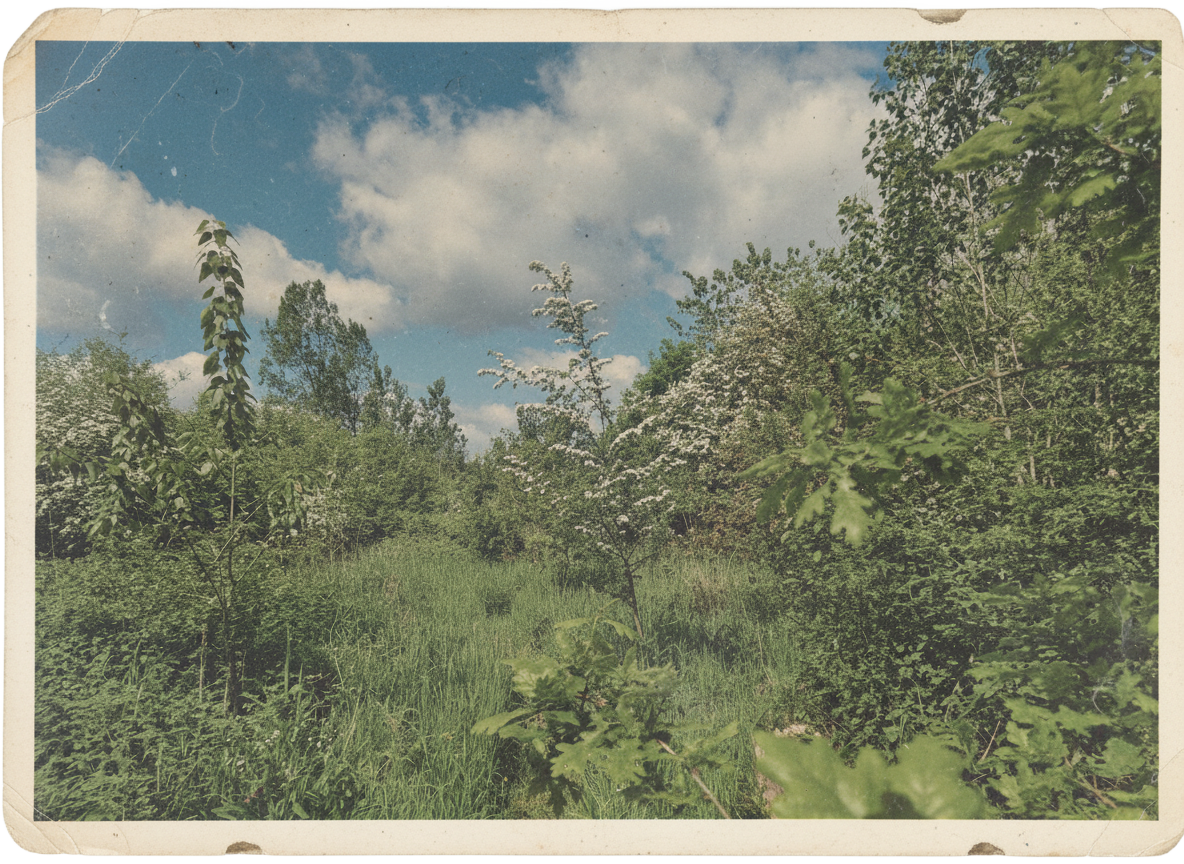
Back to my maturing little woodlot.
The food-forest never came to be. And that’s fine.
Here’s what I learned: sometimes the best design decision is recognizing what a place wants to become. The back section stays wet and clay-heavy through most of the year. My feet sinking into the ground reminding me of that every visit. Fighting that with cultivated fruit trees and edible perennials would mean a battle against nature. It would mean drainage issues, root rot, and conditions these plants simply aren’t adapted for. I could never win that fight.
But there was another reason, a bigger one. This plot is designated by regulation as native forest land. It sits right at the edge of the Gete-valley. A nature reserve that starts just beyond my garden fence. By letting this woodland develop naturally, it becomes my small contribution to expanding that reserve: a native corridor connecting to something larger than my own needs.
It’s a different kind of productivity. The woodland requires almost no maintenance, no irrigation, no amendments. Just observation and maybe clearing a small path from time to time. I can watch succession unfold: which species establish first, how they modify conditions for what comes next, where the deer browse and where they don’t. That on itself is already a huge privilege.
There are other personal benefits, too. The thinnings become firewood, the canopy will eventually provide shade and shelter, the forest will become a natural refuge — for us and for the wildlife. Non-intervention here increases resilience and regional connectivity more than any planting I could do.
So this is where my framework lands in practice: not every space needs active management. Cultivate some, leave some wild. The patchwork garden is more than enough for me to design and work on. The woodlot then, gets space to be what it already is: native, wet and connecting to something beyond my property line.
Sun is low on the eastern horizon, making me squint as I look around. I’m traversing the woodland, following an improvised pathway. Young oaks dominate, but they’re not alone: wild cherries, common walnut, willows, hawthorn, hazel, black alder, maples...all populating this tiny piece of land. Some saplings have been nibbled by deer, and I don’t mind. They’re working alongside me, selecting which trees will mature.
Different spaces, different approaches. The garden bends and adapts with my help. The forest does it on its own. Both are nature. Both are working.
In the Archive
Other reflections on nature and the garden:
On Succession: Letting Your Garden Grow Wild - Building resilience through nature’s patterns
Letting In The Light - On coppicing, liminality, and growth
On Ecotone and The Art of Stitching - How ecological edges can re-link habitats
Inspired by:
Murray Bookchin, The Ecology of Freedom (1982) · Fred Pearce, The New Wild (2015) · Frans V.M. Vera, Wilderness metaphors. Oak, hazel, cattle and horse (1997)
Other consulted sources:
Great Dixter Biodiversity Audit: https://www.greatdixter.co.uk/about/caring-for-nature/biodiversity-audit/
D’Antonio, C., & Laura, M. A. (2002). Exotic Plant Species as Problems and Solutions in Ecological Restoration: A Synthesis. Restoration Ecology, 10(4), 703-713.
Wang, J., Guan, Y., Wu, L., Guan, X., Cai, W., Huang, J., et al. (2021). Changing lengths of the four seasons by global warming. Geophysical Research Letters, 48, e2020GL091753.
Bailey, J., & Conolly, A. (2000). Prize-Winners to pariahs - a history of Japanese knotweed sl (Polygonaceae) in the British Isles. Watsonia 23(1), 93-110.
If this piece gave you something to think about, I’d be grateful if you passed it on to another gardener or reader who might benefit.
Let the garden grow wild
If these ideas are taking root, feel free to subscribe to The Perennial Workshop.
Follow my research into how resilient systems — ecological, creative, personal —facilitate simple living in complex times.
→ Let’s start growing.
‘In Second Nature we don’t see ourselves part of it. Nature then, in this definition, is decoupled from human systems and seen as an external attribute.’
A very fine point and I feel it’s true, although what if the beauty of humanity and our role on this Earth is to shape it, naturally and regeneratively, just as the ungulates that move clearings and squirrels burying nuts below ground? What a reassuring, purpose-providing thought 😌
Thank you for sharing your thoughts on this along with how you’re supporting and furthering diversity and resilience at home 🙏🏼
There are a lot of knotweeds here in the US, some are native, but we have a ton of Japanese knotweed and most knotweeds are highly medicinal, I get as much Japanese knotweed as I can, the roots are a medicinal prize. Everyone in my house gets some every day including my dog. Especially here in Lyme disease country!