
The Patchwork Issue 1: Bocage
On ghost hedgerows, the vernacular, and planting the seeds for a digital garden.

I started this newsletter three months ago. I’m grateful that you’ve been sticking around, and that you’ve taken the time to read these reflections on how to reconnect the broken patterns inside our thoughts, in the landscape, and in the world as a whole.
Three months is still very young for a newsletter. The saplings are in the ground now, slowly gaining hold of the earth. But while those roots are already growing, I’m still looking for ways to connect this future landscape. I want it to be diverse, fertile, and full of edges: a true ecotone.
In that spirit, I’ve been experimenting with a format I call a Patchwork Edition: a curated list of ideas ranging from agro-ecology and beekeeping to history, philosophy, and the arts. These are distinct nodes of content connected by a singular topic.
This first instalment explores the concept of bocage.
Patch 1 | A clean slate called snow
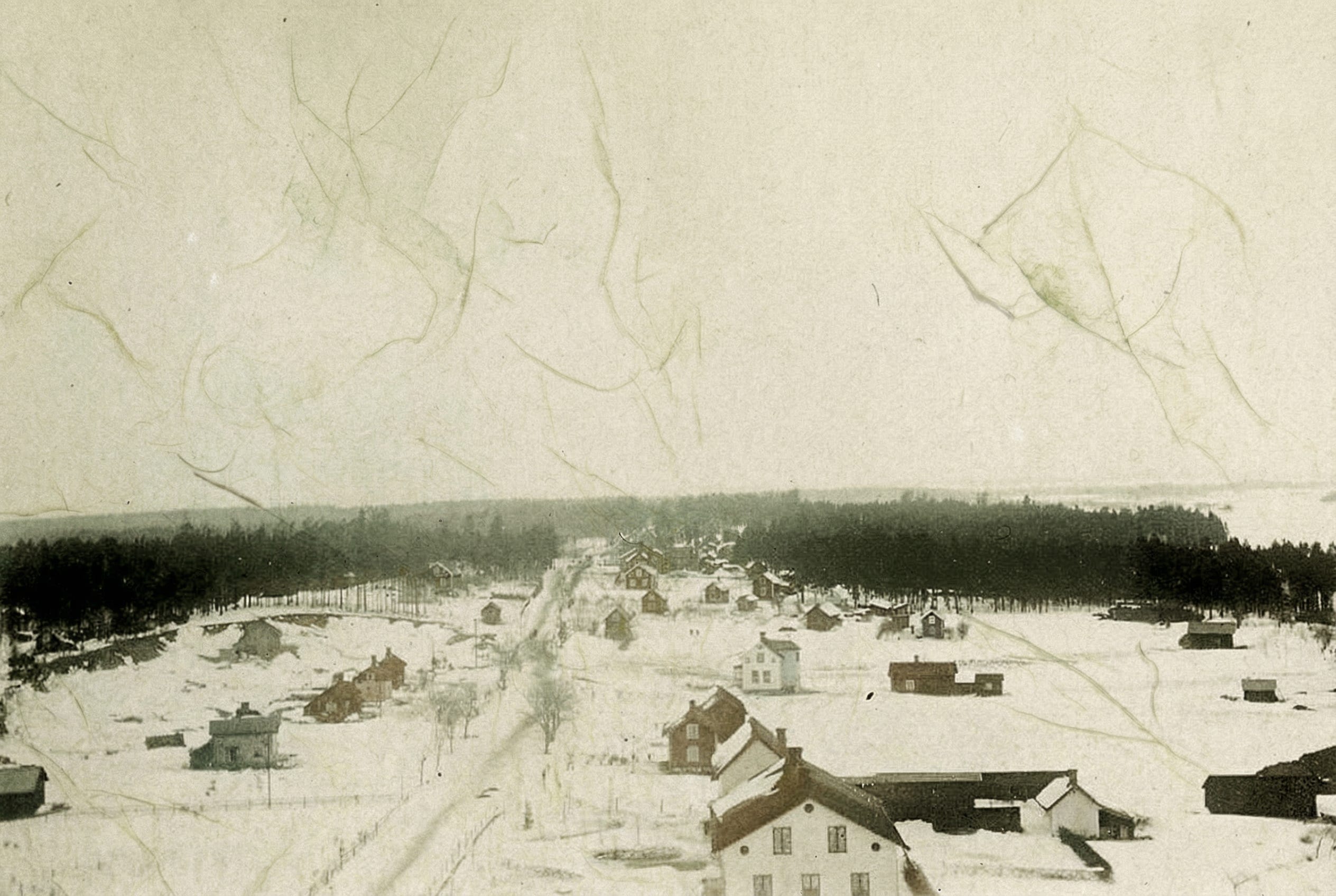
A few weeks ago, we were caught in a sudden spree of magnificent snow. Temperatures dropped overnight into subzero conditions. These kinds of cold spells feel like a sort of remedy. The earth finally gets a chance to recover and rest. The same goes for the bees. The queen stops laying eggs and an earned tranquility finally reaches the colonies.
We live amidst a region known for its orchards and plantations of apples and pears. In winter, you can feel that identity in the landscape. Field after field of the same standardized low-stemmed trees, lines and grids of production, now all dressed in the same white utilitarian uniform.
But the winter landscape reveals other patterns as well. Remnants of older landscapes, when fields weren’t merged into one large, multi-hectare asset of production. Here and there, I can still spot the patchworks: grids of hedges, old trees, bushes. The region where I live is called Hageland; literally: land of hedges.
As I’m contemplating all of this, a buzzard lifts from a pole: low over the ground, then high into the sky. And I think: what would it mean to take that bird’s-eye view.
If we only could get up there too; trade our singular, analytical view for that synthesizing, unifying perspective. We would be confronted with how we’ve divided, separated, and categorized everything: nature, work, housing, commerce.
The snow-covered landscape as seen from above, I imagine, transports the self into a liminal white-space. A blank page, a tabula rasa, ready to be written. It makes me wonder what we’ve lost, and what those older patterns can still teach us.
Patch 2 | Bocage - Patches for a connected landscape
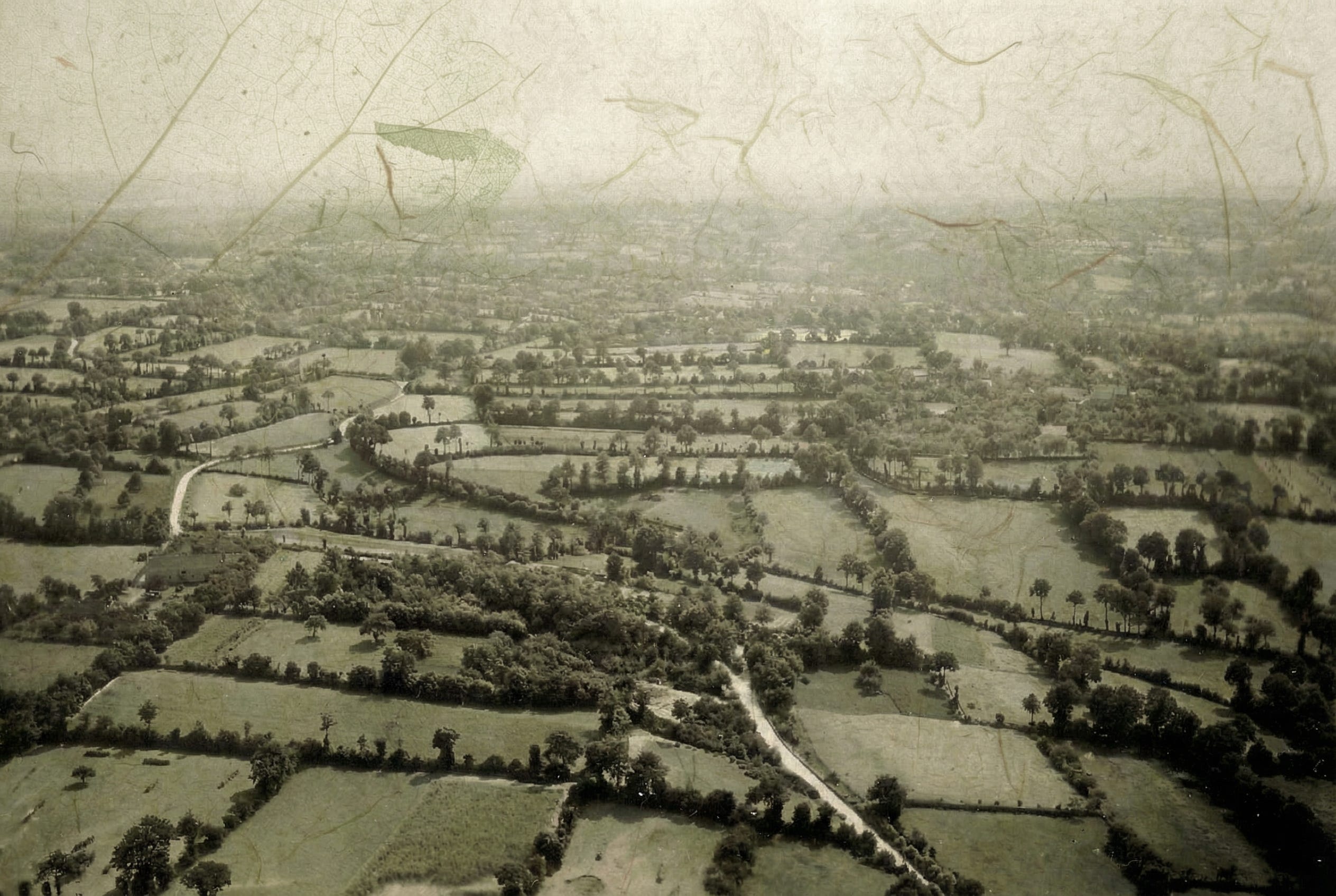
That patchwork of meadows and fields, surrounded by hedges, has a name: bocage. They are an old-world phenomenon.
But they’re also more relevant than ever. They are an embodiment of the knowledge that old techniques can help solve modern problems.
A hedge looks like a separator, yet it behaves like a connector. It shelters crops. It slows down runoff. It gives birds nesting sites, offers insects overwintering habitat, lets bats hunt along edges. The hedges can be periodically coppiced, providing timber- and firewood. It turns an “empty” field boundary into a living corridor; a green, flourishing vein, running through our modern, often sterile landscapes.
Alas, the bocage is still in firm decline. The quality of the landscape still gets traded for quantity.
A Belgian analysis of historical maps describes how about 70% of the hedgerow networks were removed in Europe in the course of the 20th century, leaving behind what the authors call “ghost hedgerows.”
A territory of scars: not only biodiversity lost, but also carbon released from soils that had been storing it for so many years.
I keep thinking: the modern world doesn’t merely remove hedges. It removes the idea of the hedge. It prefers the open field: maximum short-term efficiency, minimum friction, no maintenance, no edges.
And then we act surprised when everything feels brittle.
Patch 3 | The larger picture: Our world in biomass
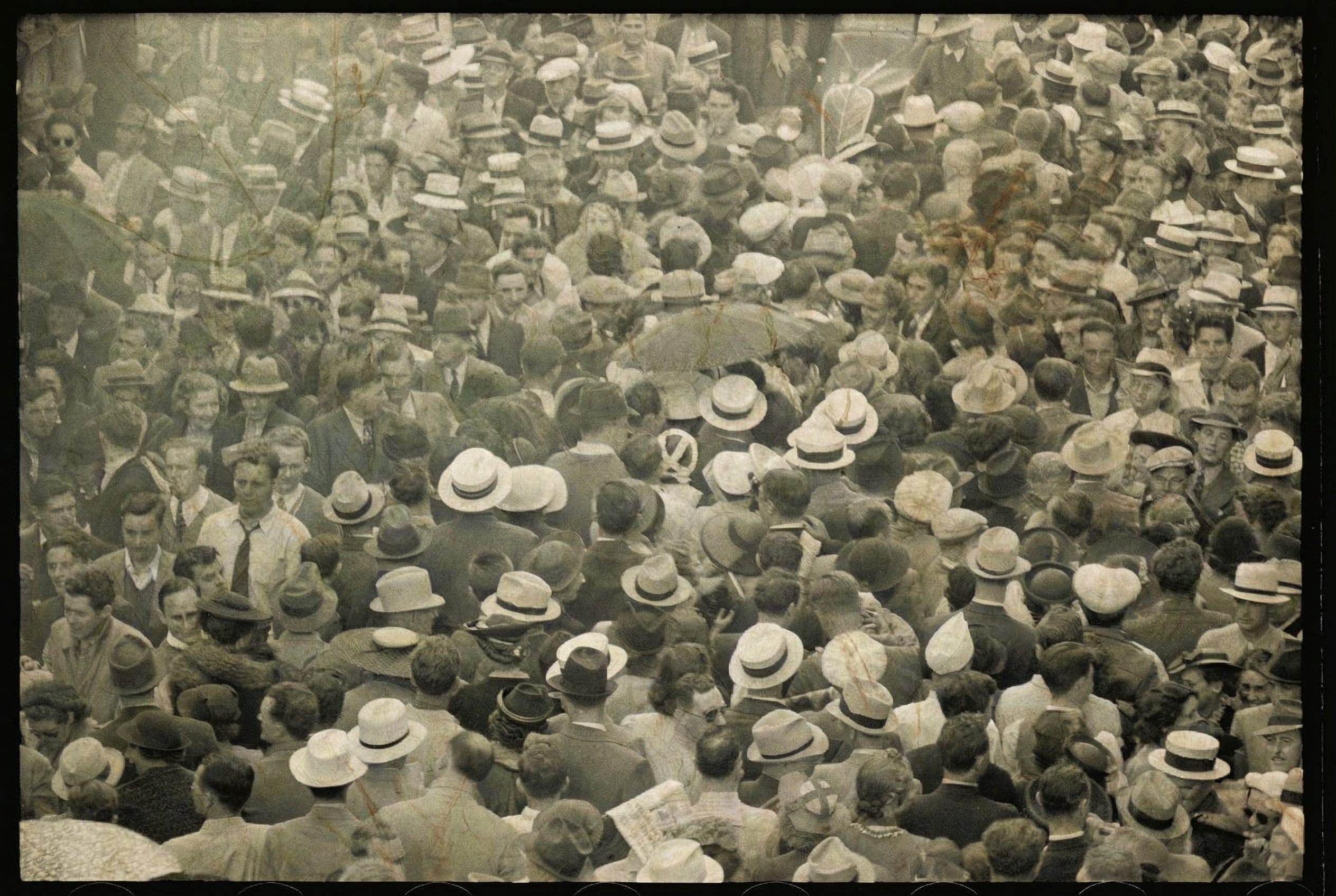
The decline of the bocage has a high impact on the local landscape. But if we zoom out a bit more, the reduction of habitat becomes visible all around.
Research from Our World In Data, reveals, as the title suggests, that almost all of the world’s mammal biomass is humans and livestock. Yet another example of how nature’s balance is shifting towards a singular side.
Humans make up 36% of mammal biomass. Livestock and pets make up 59%. All the other wild mammals (thousands of species, from deer to dolphins) are reduced to 5%. Our own weight is more than seven times that of all wild mammals combined. Not 5% of species. Five percent of weight.
Some comparisons feel surreal: farmed pigs outweigh the combined mass of whales, dolphins, seals, orcas, and sea otters. And while wild mammal biomass has collapsed, total land mammal biomass roughly quadrupled since 1850 to ~1.1 billion tonnes. This is all powered by fossil fuels, fertilizers, cleared land, and engineered crops.
So the mammal kingdom becomes “vast” in one sense (more total tonnes), while shrinking in another (less diversity, less room for wildness). It’s the open field logic, scaled up: one dominant output, everything else reduced to margins.
Patch 4 | Illich, the vernacular and the patchwork quilt
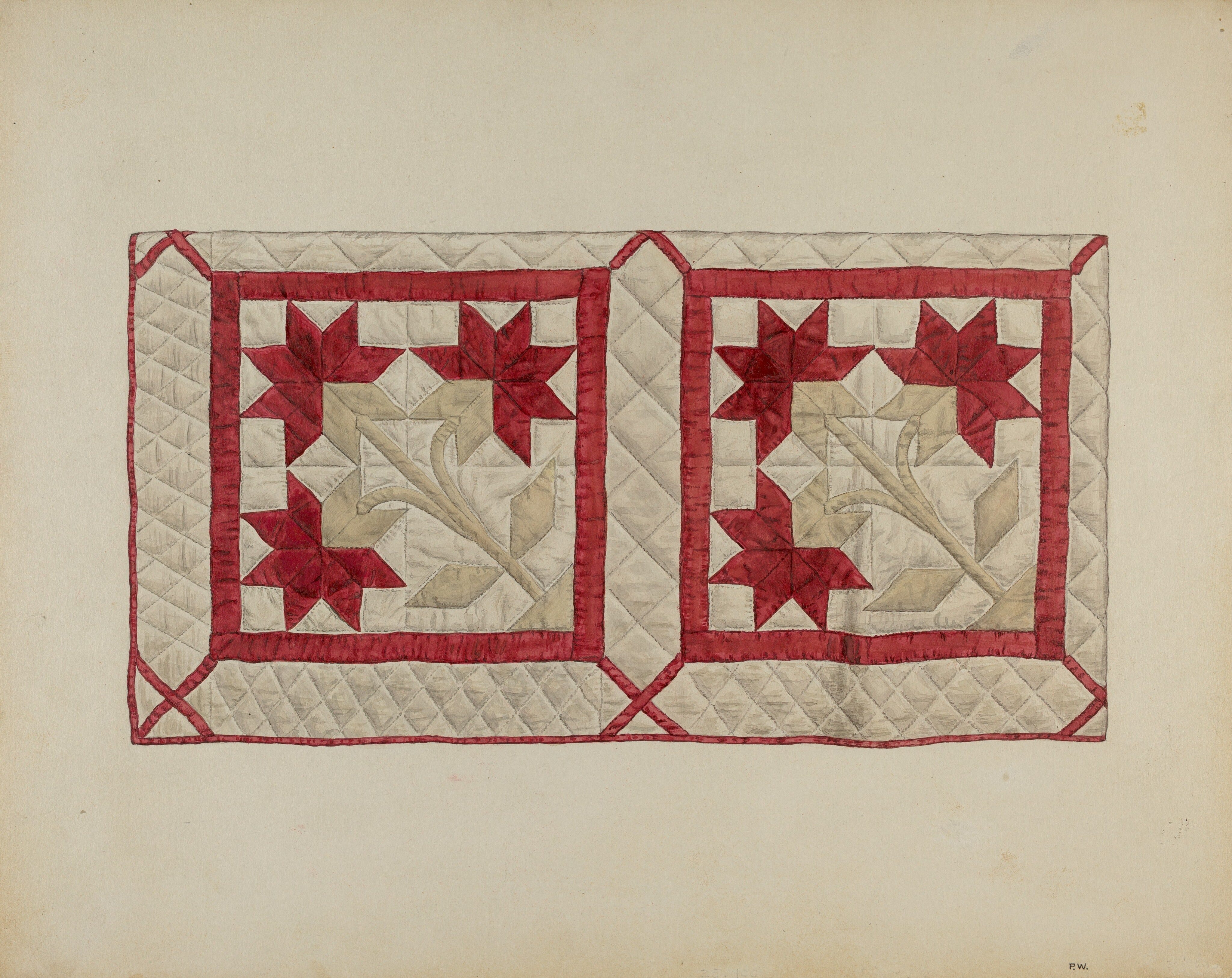
There is this interesting concept of a “patchwork quilt” as proposed by the fascinating and rather radical thinker Ivan Illich.
He uses the idea of a patchwork quilt to describe a mode of life that persists in the niches of the industrial market. He speaks of “stitching together” a vernacular existence that is “orthogonal” (at right angles) to the commodity-intensive mainstream.
And while that sounds a bit academic, even abstract, what he means is actually really down to earth.
To Illich, the word “vernacular”, in its most general meaning, becomes a synonym with homemade, homegrown or homebred. It refers to all those things that we can still do for ourselves, with our own skills and knowledge, in our own households and communities. Think of growing our own food, of building homes but also singing and idling. It’s all these things that refuse to obey the laws of the market.
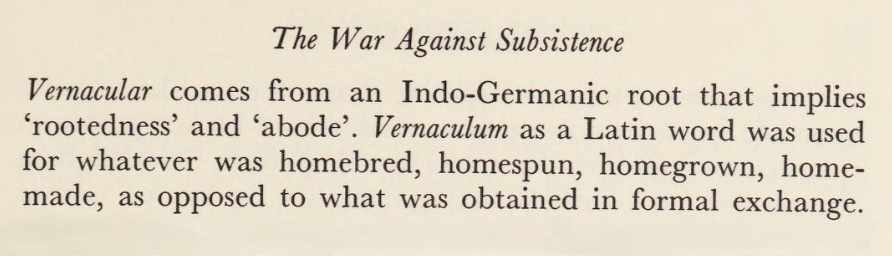
All these small, vernacular practices add up. As we take over the control of our life again, a beautiful patchwork quilt of skills and values emerges. A small act of resistance. Seemingly innocent, but stitched together, they form a connected bocage-landscape that enhance our toolkit for increasing resilience and agency.
This, then, is neither a romanticization of the past, nor is it an escapist practice of withdrawing to an isolated island. It’s the art of setting up a system that runs in parallel with the status quo: learning to improvise, to repair, to reuse, to become.
The vernacular, then, is the ideological incarnation of the bocage: a refusal to treat life as one big, open field - an eternal repetition of a singular job with a singular output called consumption. It’s understanding, that life can be designed to become diverse, fertile and interconnected.
Patch 5 | Bocage as a digital garden
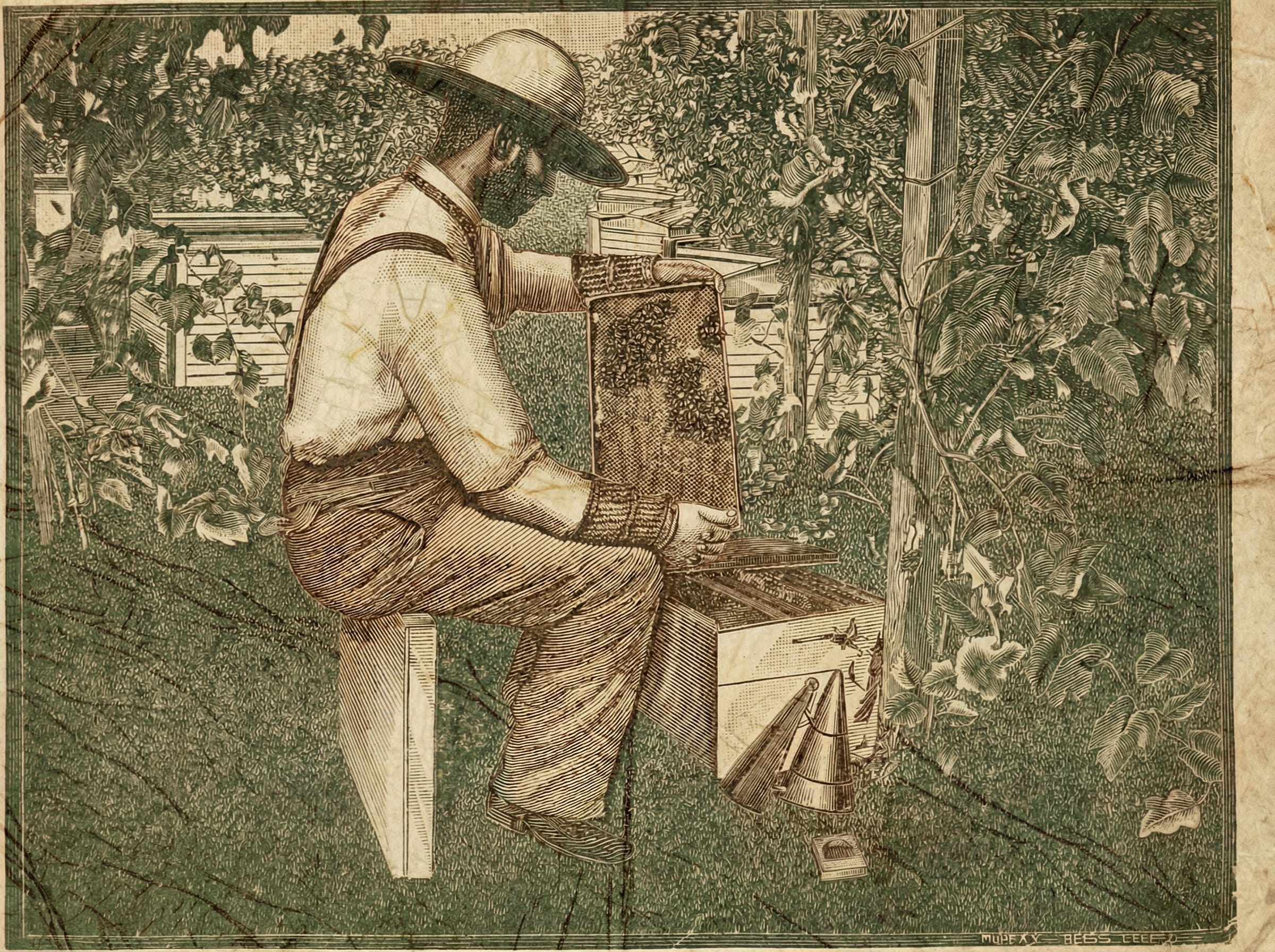
Researching the bocage has had a strange side effect: it is remapping my mind. As I trace the resilience of these hedgerows, I’ve started to view our online presence through the same lens. If the bocage is about connecting the landscape and increasing diversity in the margins, what is the digital equivalent for our own body of work?
Most of us build our intellectual homes on rented land. We accommodate a lifetime of thinking on social media and blogging platforms owned by big corporations. These are brittle monocultures where ideas are swept away by the linear “stream.” We have no control over their policies, and our work is essentially destined for planned obsolescence. It is a fragile way to store a legacy.
The necessary counter-movement is the digital garden.
Unlike the ephemeral feed, the digital garden is a personal wiki: a sustainable vault where knowledge is composted, not just consumed. It creates a powerful dualism in our creative work:
The Website becomes the Hive: The fixed, permanent structure providing memory and sovereignty.
The Newsletter becomes the Swarm: The distribution of ideas that ventures out, active and alive.
My intent is to turn my writings into such a garden. It will be a digital bocage: an ecotone of interlinked hedges where ideas can forage, connect, and rest. Readers are invited to wander through the corridors, rather than scroll past them. Because if we truly care about Permanence, we must stop treating our writing as a throwaway good.
In the Archive
Discover my writings exploring hedges and ecotones:
On Ecotone and The Art of Stitching: Exploring how ecological edges can re-link habitats and how ‘edge thinking’ can re-link our ideas.
At The Hedge: A short tour of edges, hives, and how my newsletter works.
Other sources:
If you want to dive deeper into the realms of digital gardening I recommend starting by reading Maggie Appleton’s A Brief History & Ethos of the Digital Garden
The concept of the Vernacular is taken from Ivan Illich's Shadow Work. Borrow it at archive.org
A Note on the Commons I am keeping The Perennial Workshop open to everyone because I believe we all need these tools to rethink our thinking. If these writings offer you insight and value, consider becoming a paid subscriber to support the workshop.
Hello Micha! Thank you for this rich, engaging thinking. The idea of seams and edges, at once dividing and holding together the within and without, is indeed perennial, suggestive (of what, exactly?), but not very easy to grasp… Do you read Andrew Marvell? In his “Appleton House”, a cloister is sketched out in terms of paradox:
these Walls restrain the World without,
But hedge our Liberty about.
These Bars inclose the wider Den
Of those wild Creatures, called Men.
The Cloyster outward shuts its Gates,
And, from us, locks on them the Grates.
Looking forward to new chapters in your work.
Wonderful edges and hedges,of all descriptions, framing and encouraging connection and life. Just such a beautiful read. Thank you.